Left Behind?
I don't know about you, but AI content dominated my feeds this year. It felt like anyone and everyone was posting about AI. A few authors approached the subject with a level head, sharing in an informative and helpful manner, but most used scare tactics. Unfortunately, social media relies on hooking people at an emotionally visceral level by tapping into their fear, outrage, anger, or horniness to capture attention. Nevertheless, over the course of the year, I noticed a recurring theme: Left Behind.
"Learn [X] AI tool or be left behind!" "If you're not using these seven AI workflows, you're already behind!" (Recycle again and again in various arrangements.)
This idea of being left behind is gripping. No one wants to be left behind. I remember, as a child, the thought of being held back a grade while my friends advanced terrified me and drove me to study. Can you relate? Or maybe, at some point in your life, you found yourself all alone in a place you and wondered, "Did I miss it? Did the rapture happen without me?" Okay, that one might just be the byproduct of being in a church youth group in the 90s.
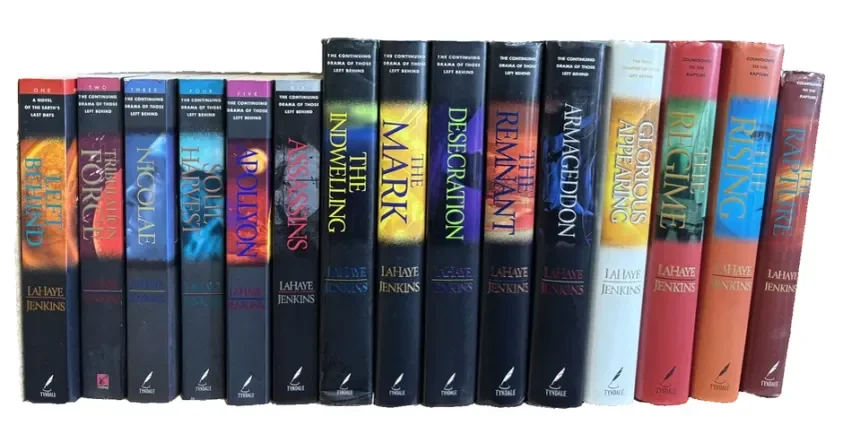
If you were a Christian in the 90s, I’m confident you remember the hit fiction series Left Behind. I never read the books myself, but my sister did, and so did millions of others. Tyndale.com says "the books launched a cultural phenomenon," which is probably accurate because, as a teenager, even though I had never read a page of the series, it felt like I couldn't escape it. According to the internet, the 16-book series has sold over 65 million copies—many of which I still encounter on the shelves of used bookstores some 25 years later.
You might think the fear of being left behind is a version of the fear of missing out or FOMO, which I've written about before. I did that at first. But as the year wore on and I read more and more of these posts, I noticed that the fear of being left behind hit me differently than FOMO. With FOMO, you’re kicking yourself for missing an opportunity, but deep down, you know more opportunities will appear. The feelings dredged up by being left behind were darker and more final. They whispered stories of losing my ability to provide for my family with no way to catch up or recover. Culminating in my death, penniless and alone.
As I thought about it more, these posts began to tick me off. I know fear sells, but it's manipulative, gross, and I absolutely despise it as a sales tactic. Anytime a salesman tries to use fear on me, the conversation is over; it doesn't matter how good the product is. I will not be buying the product from that salesperson.
Over the months, as I wrestled through my anger and annoyance, the Lord put a thought in my head: some of the posts weren't just communicating fear; they were created from a place of fear. Some of these authors were and are legitimately scared about their future livelihoods and identities. They don't have the peace I have. The peace I possess was a gift from the Prince of Peace.
“Peace I leave with you; my peace I give you. I do now give you as the world gives. Do not let your hearts be troubled and do not be afraid.”
Peace is a gift that many of us neglect. Sometimes, I take it for granted and fail to empathize with those gripped by fear, which was the case with those LinkedIn authors. Other times, I'm the one consumed with worry, and the Prince of Peace has to remind me that I've placed His gift on a shelf where it's gathering dust. As children of God in the games industry or any field that uses technology, we should assume that technology will continue to change and evolve, and that we will need to continue learning and adapting to those changes. But we will never need to fear them because our worth and identity don't come from our career, but from our Creator.
As AI continues to change our tools, techniques, and workflows, I pray that we hold onto the peace we have been given. I'm confident that we can use this new technology to assist us in our work—to reduce repetition, frustration, and toil—and that, over time, it will just become another tool in our toolbox to help us bring our ideas to life. Personally, I've been enjoying exploring how to use AI in game development this year—not out of fear, but out of curiosity and excitement. It has helped me reduce the time needed to integrate new packages and new APIs, modify shaders (which is an area I'm weak in), search my codebase to identify optimizations, reduce memory allocations, and write tests. I feel like my relationship with AI is positive and healthy when used in a collaborative role, such as another set of eyes, a research assistant, or a junior programmer to whom I can offload small tasks.
With all the fearful AI content I've consumed this past year, I want to do the opposite and leave you with one of the most thoughtful AI talks I've heard. At CGDC 2025, Alex "Magnus" Lehmann shared how Christian game developers can approach AI not with fear or hype, but with wisdom, humility, and courage in his talk entitled, "The Opportunity of AI: Creating Thoughtfully in a Changing World." Enjoy.