Our Mission Isn’t Metal Gear
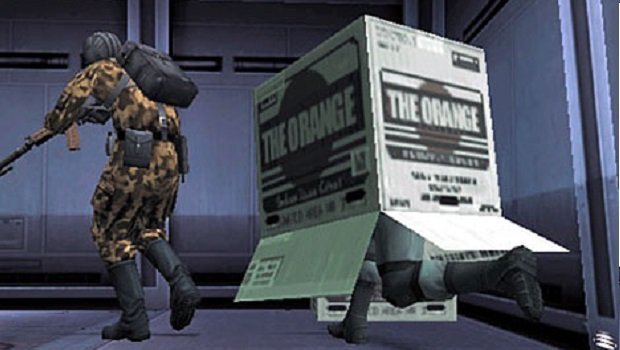
I've been playing Metal Gear games since I was eight years old, starting on the NES. The series holds a special place in my heart, especially Metal Gear Solid 1-3 on the PS1 and PS2. Over Christmas break, the Games Every Designer Should Play podcast did an episode on Metal Gear Solid. I had almost forgotten how much the game blew me away when it came out. The tense stealth gameplay, the eccentric cast of characters, memorable boss fights, and Kojima pushing the limits of interaction design and hardware capabilities captivated me and millions of others.
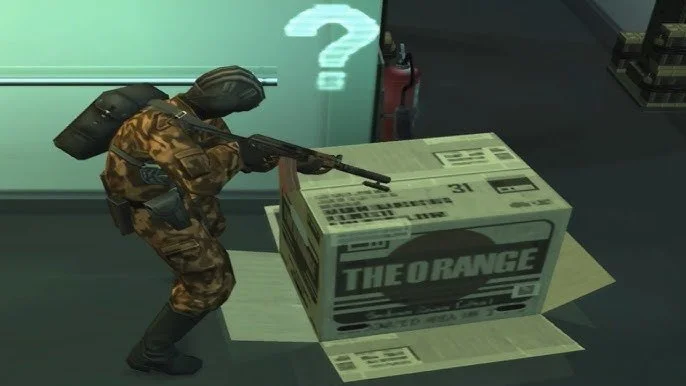
Sometimes I meet Christians who I assume must be fans of the series, because the way they talk about being a Christian in the gaming sphere feels straight out of Metal Gear. For instance, I've heard some believers assert that they must operate in "stealth mode" at all times to avoid jeopardizing their careers. Others speak of tactically infiltrating the industry for God and targeting high-profile targets. There are even groups plotting to bring down parts of the entertainment machine altogether.
While it sounds exciting and dramatic to be a part of, I question whether it is truly the mission we've been given.
Bear in mind, I'm not speaking with missionaries smuggling Bibles into China and North Korea or pastors organizing an underground church or serving as spies like Dietrich Bonhoeffer. Those brothers and sisters are in real danger, putting their lives on the line for the gospel, and doing things that require stealth and secrecy. The individuals I'm talking to, however, are making video games.
That said, I'm not minimizing the spiritual battle around us. The enemy would love it if I did that; it's one of his favorite strategies. If he can lull us into a comfortable complacency, leaving us oblivious to his schemes, he can wreak havoc on the people of this world. Preston Morrison explained this error in a sermon entitled "The War is Raging."
What I'm addressing are the errors that arise from the other extreme. These include fixating so much on the enemy's actions that it consumes our focus, confusing our enemy with the people around us, operating more in our flesh than in the Spirit, prioritizing conquests over caring for the casualties, or making things so unusual that they become difficult for others to relate to as human beings.
I've also noticed that those who are drawn to this metaphorical language (including believers) often adopt closed, defensive, or even aggressive postures toward the world. The Bible states, "out of the overflow of the heart, the mouth speaks" (Luke 6:45). I suspect these hardened exteriors conceal hearts that are angry, fearful, and wounded—or at the very least, lacking peace.
In contrast, some people live from an open posture. Jesus was open. I want to be open—open to people and being vulnerable, open to connecting and sharing, open to new situations and new environments—not holding on to past hurts, or carrying the weight of fear, but looking and moving ahead with hope, trust, love, compassion, and curiosity.
When I read the Bible and consider how Jesus conducted his mission, it feels fundamentally different than the missions some others seem to be on. I don't say this to criticize; we all have Grand Canyon-sized gaps between our lives and Jesus' life. Instead, I encourage us to reflect on scripture together and examine our lives so that we may conduct ourselves in a worthy manner within the gaming sphere.
Here are seven key elements from the Bible that pertain to our mission:
Stealth is not required.
Not only is stealth unnecessary, but it actually runs counter to Jesus' teachings. In Matthew 5, Jesus explains, "You are the light of the world. A town built on a hill cannot be hidden. Neither do people light a lamp and put it under a bowl" (or in the case of Metal Gear, a box). No, Jesus said, "let your light shine before others, that they may see your good deeds and glorify your Father in heaven." As Christians, our lives are to be lived openly, not in the shadows, so that people can see God work in us and through us.
God's not looking for the elite.
Solid Snake is a highly skilled special operations soldier. While Metal Gear missions might require someone of his caliber, God's missions do not. God loves to do extraordinary things through ordinary people. He chose a stutterer, Moses, to speak on behalf of Him and His people. He selected the weakest warrior in the weakest tribe, Gideon, to lead His people into battle. Additionally, He chose a humble teenage girl, Mary, to bear His son, the king of the universe.
Human tactics aren't God's tactics.
When we strategize, we rely on factors such as speed, the element of surprise, force, or cleverness to gain the upper hand. However, God goes on record, reminding us that His thoughts and ways are not our ways (Isaiah 55:8–9). Consider God's plan for the battle of Jericho or His instructions to Gideon; those plans sounded crazy from a human perspective. Yet, God wasn't asking them to fight and win on their own; He was asking for their obedience so that He could provide the victory. When we depend on clever plans, influence, or cultural power, we may find ourselves fighting battles God never asked us to fight.
We often misidentify the enemy.
Sometimes the church gets so worked up and bent out of shape that we mistakenly view things like culture, art, entertainment, ideas, or certain groups of people as our adversaries. Paul reminded the church in Ephesus, "For our struggle is not against flesh and blood, but against the rulers, against the authorities, against the powers of this world's darkness, and against the spiritual forces of evil in the heavenly realms." (Ephesians 6:12)
The mission is simple.
Unlike the complex missions in Metal Gear, the mission Jesus carried out was simple: I'm going to do what the Father wants me to do, say what He wants me to say, and go where He wants me to go. (John 5:30, John 6:38) While we tend to complicate things, the more in tune we become with the Spirit, the simpler our mission becomes.
God does the heavy lifting.
In games, success often requires skill, precision, and perseverance. But the story of scripture tells a different story: God accomplishes the victory. Jesus said, "Apart from me you can do nothing" (John 15:5). The Apostle Paul echoed this when he wrote, "I planted the seed, Apollos watered it, but God has been making it grow" (1 Corinthians 3:6). Our role is not to force results or control outcomes. Our role is faithfulness—showing up, loving people, speaking truth, and trusting God to do what only He can do.
We have nothing to fear.
The most repeated command in scripture is not to be afraid. It seems to include everything on earth, including people, persecution, resources, the future, evil, and even death. When fear no longer controls us, we are free to live differently. We can speak honestly, love generously, and thrive in uncomfortable situations without the need to hide in boxes or protect our status or careers.
As I attend GDC this week, I plan to be there with a clear purpose and an open posture. I'm going there to be part of an industry I love. More specifically, to people I love and whom God called me to love. If you're going, I hope you will do the same. Gaming needs the good news of Jesus to reach every corner and crevice. It needs His followers to be present there, not as commandos performing a full-frontal assault or in stealth mode, but as friends, workers, servants, healers, teachers, and guides.